TL;DR
Qualitative research into the needs of skilled immigrants entering the U.S. white-collar job market.
The study combined interviews, community data, and journey mapping to understand key barriers and motivations.
It revealed a broader core audience than initially assumed and highlighted volunteering and the DYC program as central ways to address multiple overlapping pain points.
Insights informed website positioning, content priorities, program improvements, and recommendation prioritization.
Context
The research was conducted for CPI, a nonprofit organization working with immigrants in the U.S., at the stage of redefining website information architecture and developing program directions.
At the time of the research, CPI was:
- Scaling the Design Your Career (DYC) paid program
- Rethinking community engagement formats
- Exploring a new direction: “volunteering on demand” as a way to support immigrants’ career adaptation
The research was intended to inform website structure, content priorities, and program positioning, with a focus on improving clarity, navigation, and user understanding.

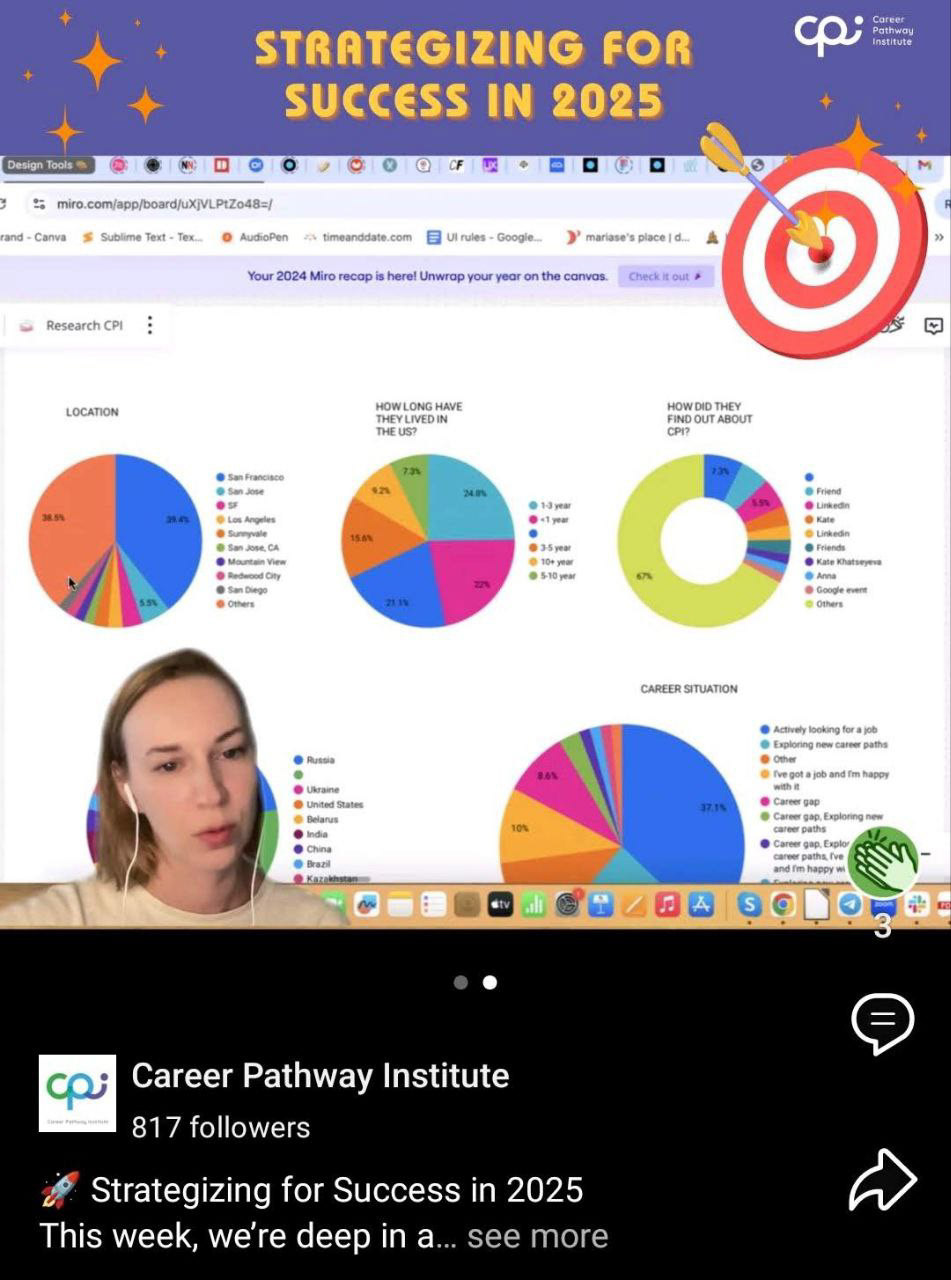
Presenting research findings and audience segmentation to CPI stakeholders using a Miro board.

Research Goals
We needed to understand:
1. How immigrants search for career-related information in the U.S.
2. What content and programs are perceived as most valuable
3. How the DYC program is understood and evaluated by participants
4. What motivates engagement in community events
5. What attracts (or blocks) participation in volunteering
6. Where CPI may have potential for financial growth through programs and services
Research approach
A qualitative research approach combining:
- Surveys
- Semi-structured interviews
- Analysis of existing community-generated content
- Review of external social research on immigrants’ adaptation in the U.S. (used only to validate internal hypotheses)
Data sources:
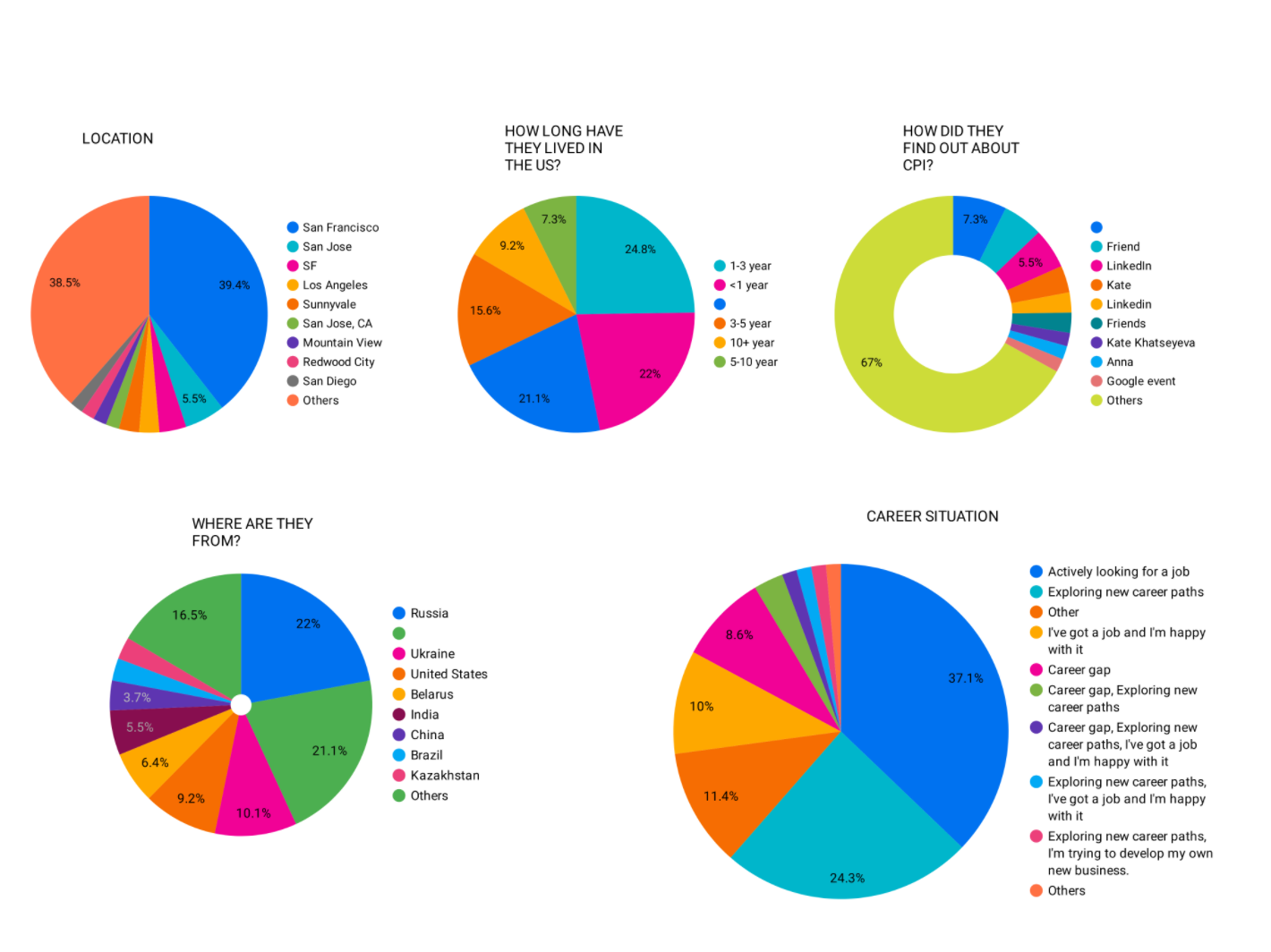
- Questionnaire responses from community members via the website
- Intro-channel posts in Slack with members’ personal stories
- Interviews with DYC program participants
- Interviews with recent immigrants who are not CPI members or DYC participants
Interview focus blocks:
Experience as an immigrant in the U.S.
Participation in CPI programs
Experience with the DYC program (only for DYC participants)
Key Insights
1. CPI’s actual audience is broader than originally positioned
The community includes not only dependents, but also a wide group of skilled immigrants with diverse visa statuses.
2. The core user profile is a skilled immigrant with a university degree
Most participants are navigating the transition into their first job in the U.S., often after a strong career in another country.
3. Lack of U.S. work experience is the most critical barrier for skilled immigrants, regardless of prior qualifications.
4. Visa-related work restrictions amplify career uncertainty
Especially for dependent visa holders, limited work eligibility delays career decisions and confidence.
5. Professional isolation is a major hidden pain point that directly affects confidence, decision-making, and job search behavior.
Many immigrants start without a local network, reducing access to referrals, mentorship, and informal job opportunities.
6. Career breaks and income drops affect confidence, not just resumes
Participants describe emotional impact from underemployment, repeated rejections, and loss of professional identity.
7. Skilled volunteering is perceived as a realistic way to reduce multiple pain points at once
It helps with local experience, confidence, decision-making, and networking.
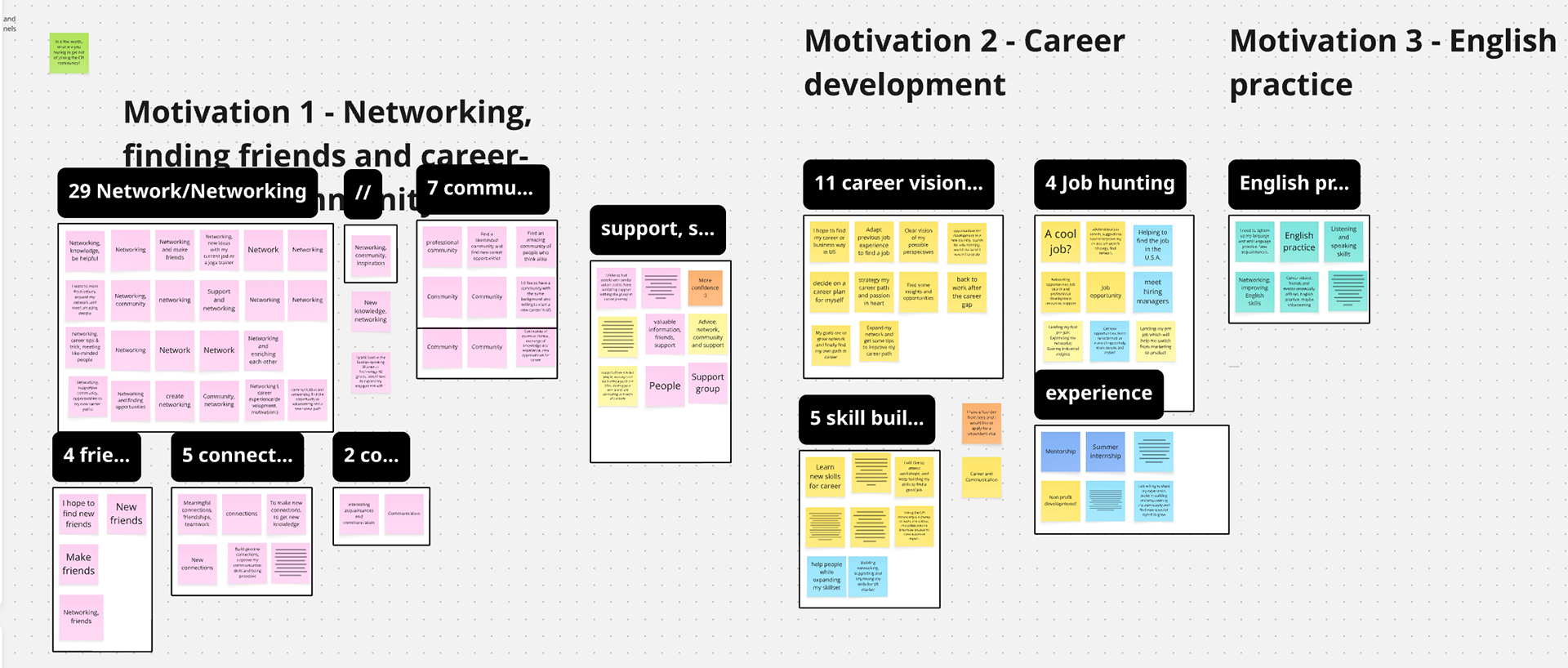
This affinity map summarizes recurring motivations identified through analysis of community stories and the onboarding questionnaire, helping assess whether CPI content and programs align with these expectations. This analysis revealed that career development–related motivations overlap with multiple unmet needs, which informed the focus on volunteering and DYC as key offerings.
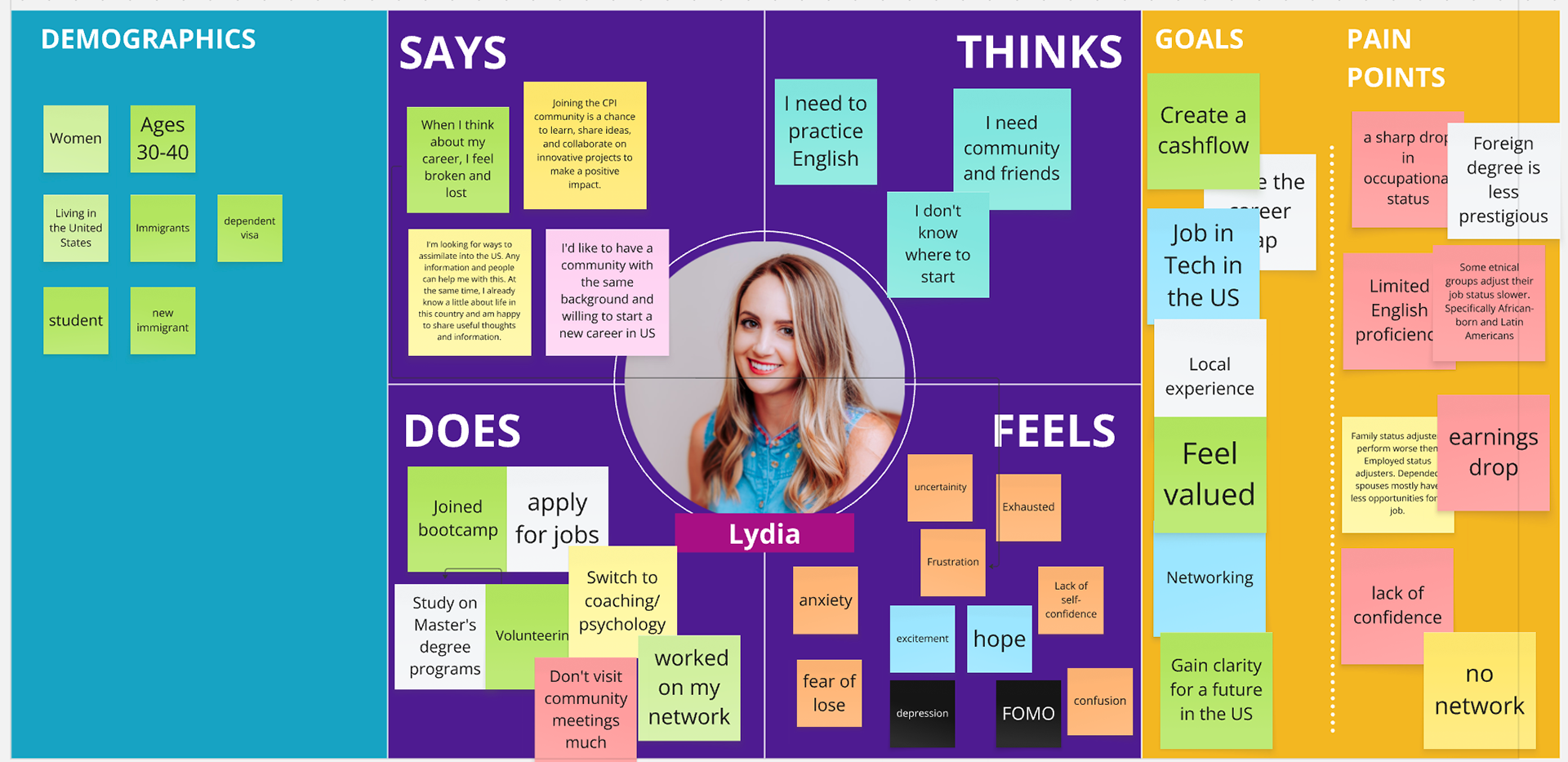
Persona Empathy Map
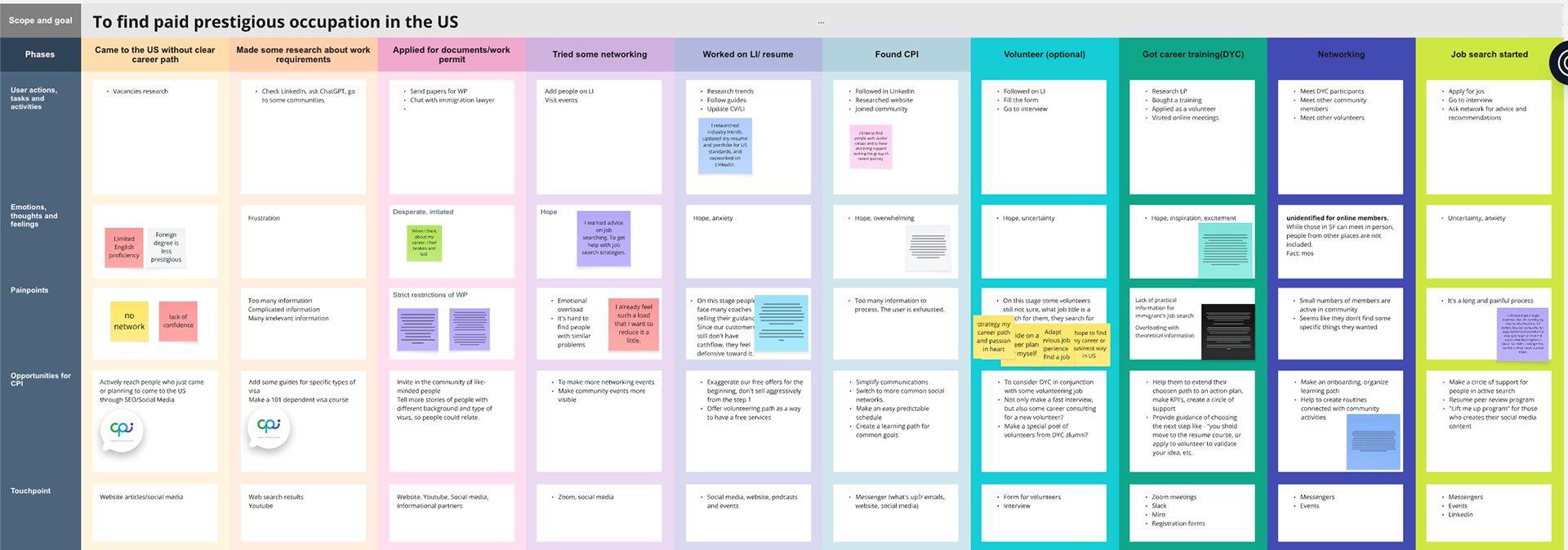
The map visualizes the end-to-end path from arriving in the U.S. without a clear career plan to starting a white-collar job, highlighting emotional states, constraints, and opportunities where CPI products can provide support.
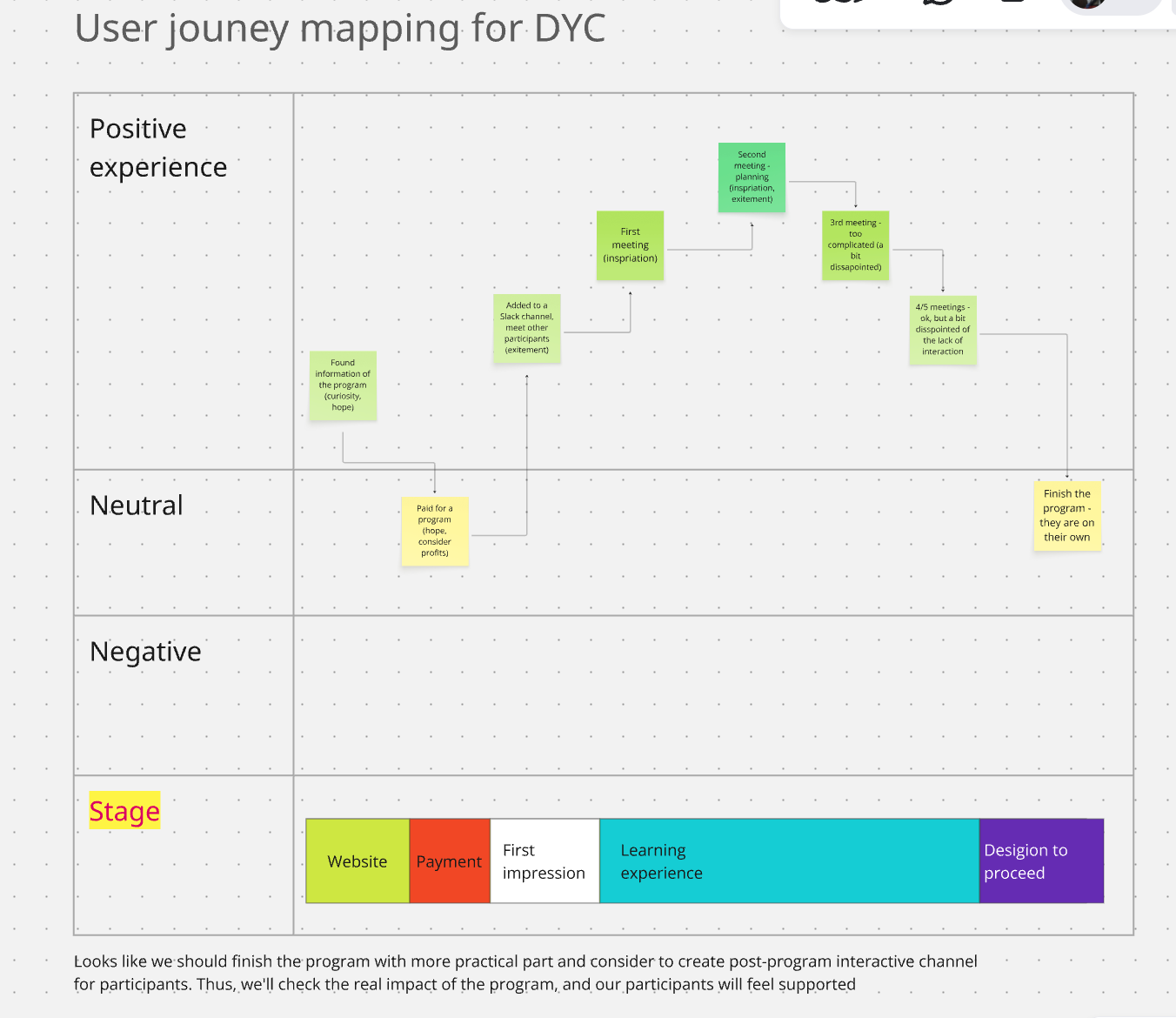
User Journey Mapping for DYC Participants

This journey map visualizes the end-to-end experience of DYC participants, focusing on emotional highs and lows across key stages — from first contact and payment to learning sessions and post-program outcomes.

Implications / Recommendations
Website & Content
Reposition CPI’s mission
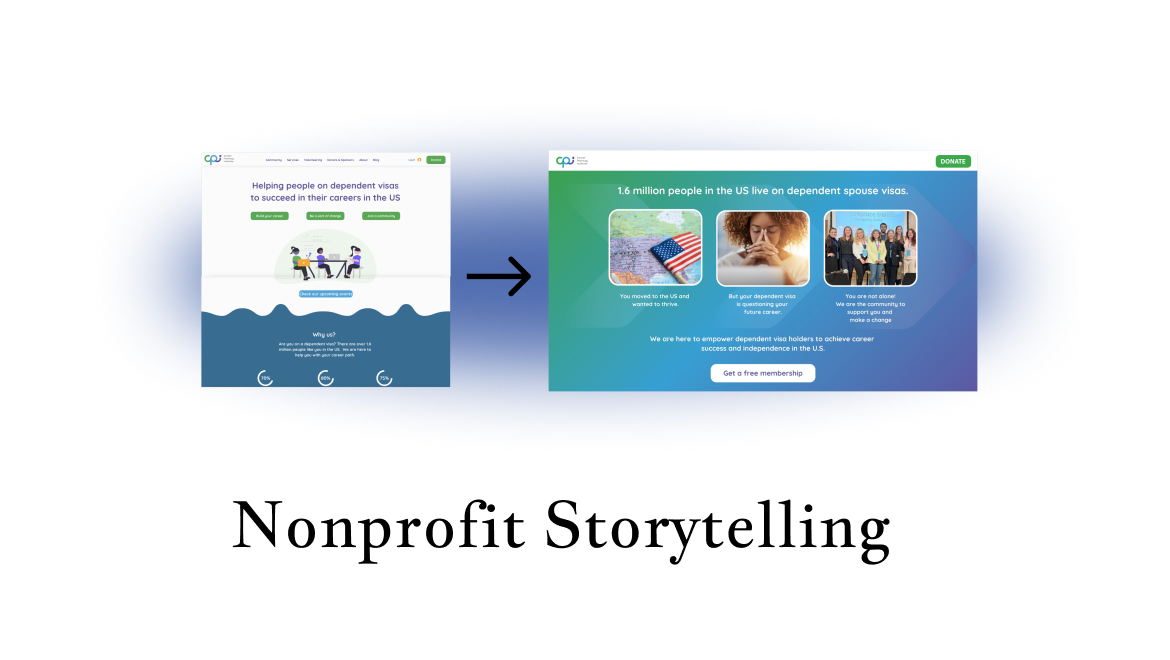
Explicitly communicate the shift from “dependents-focused” to supporting all skilled immigrants in the “About Us” section.
Update the core narrative and hero sections
Reflect the real primary audience:
“Skilled immigrants with a university degree seeking their first job in the U.S.”
Introduce guided onboarding
A lightweight onboarding flow (email or chatbot) such as
“First Job in the U.S. Starter Pack” to help users choose how to engage with CPI.
Position DYC as the first step in a job-search journey
Not as an isolated program, but as an entry point into long-term career adaptation.
Strengthen volunteering visibility
Present skilled volunteering as a way to explore career paths and gain local experience.
Improve event discoverability
Add a centralized events calendar with direct links to Luma on the community page.
Expand practical, informational content
More materials on:
Visa types
U.S. job market specifics
Educational and retraining paths
(less motivational, more applied)
Address SEO and AI search visibility
Identify how CPI content can surface in search engines and AI-based discovery tools.
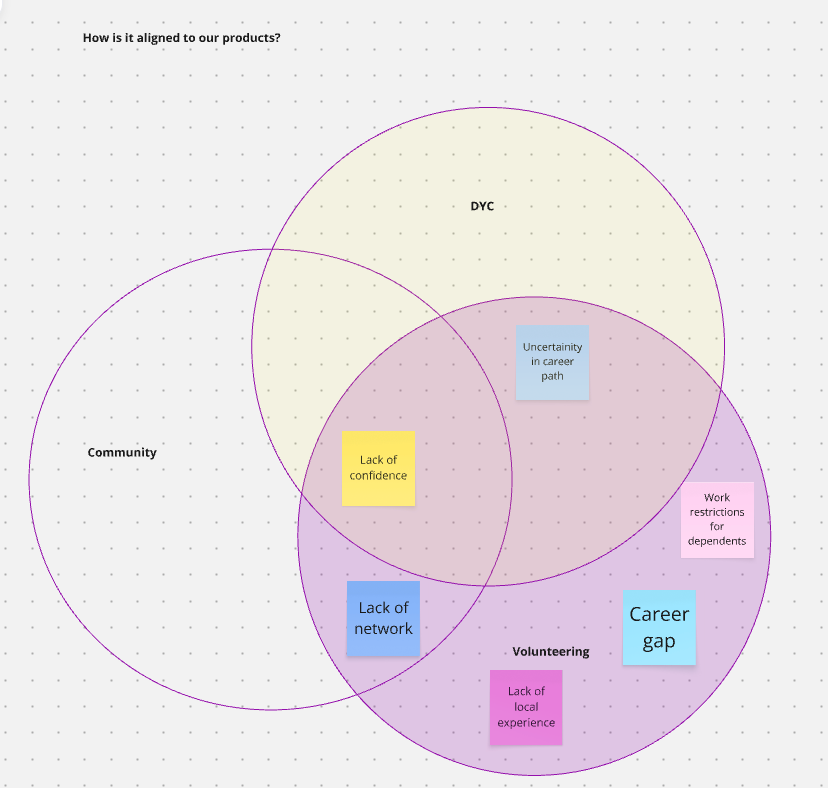
Product–pain point alignment used to inform prioritization and promotion decisions

DYC Program
- Extend the program with a practical 3-month action plan
- Add exercises on idea validation and career hypothesis testing
- Strengthen the confidence module with practical self-presentation techniques
(e.g., adapted insights from structured confidence workshops)
- Create structured alumni support circles
- Add a dedicated space for members interested in self-promotion and social media presence

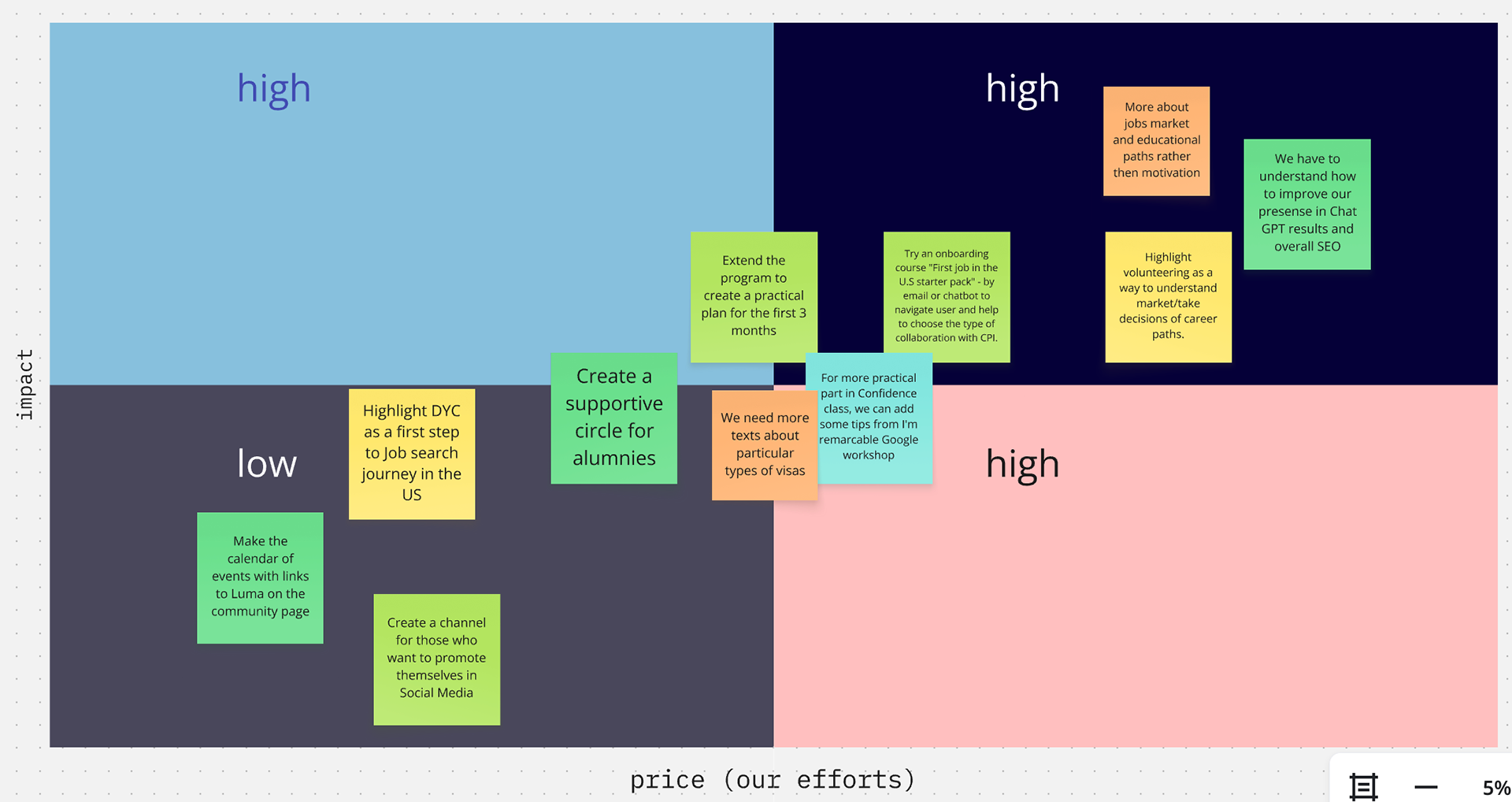
Based on the research insights, recommendations were prioritized using an impact–effort matrix to identify initiatives that could be implemented quickly while delivering the highest value to users.
You may also like

Back to Top